

8.38 mm laminated glass
Understanding Linear Guide Rail Types Linear guide rails are essential components in modern machinery and automation systems, providing smooth and precise linear motion for various applications. These rails facilitate the movement of machine parts, ensuring accuracy and reducing friction in mechanical systems. As technology evolves, so do the types of linear guide rails, each designed to meet specific performance needs and applications. In this article, we will explore the main types of linear guide rails, their features, advantages, and typical uses in industry. 1. Ball Linear Guide Rails Ball linear guide rails are among the most commonly used types. They consist of a rail and a linear block, with hardened steel balls inserted between them. The balls enable smooth motion and reduce friction, allowing for high-speed operation. One of the primary advantages of ball linear guides is their capability to handle heavy loads while maintaining precise movement. These guides are widely used in CNC machines, robotics, and other applications requiring high accuracy and load-carrying capacity. 2. Roller Linear Guide Rails Roller linear guide rails utilize cylindrical rollers instead of balls. This design provides a larger contact area, leading to an enhanced load capacity and stability. Roller guides excel in applications that demand high rigidity and minimal deformation under heavy loads. They are often used in heavy-duty machinery, such as industrial presses and large fabrication equipment. However, the roller linear guide may have a higher friction coefficient than ball guides, which can affect speed. 3. Profile Rail Guides linear guide rail types Profile rail guides feature a square or rectangular cross-section, providing a robust and versatile solution for many applications. These guides also include rolling elements, similar to ball or roller guides, but are designed to handle varying loads and environmental conditions. Modular and adaptable, profile rail guides are suitable for applications ranging from light-duty to heavy industrial machinery. Their ability to withstand bending and deflection makes them ideal for precision applications. 4. Magnetic Linear Guide Rails Magnetic linear guide rails operate on the principle of magnetic levitation, where a magnetic field effectively lifts and guides the moving component without physical contact. This design minimizes friction, wear, and maintenance, making it an attractive option for clean-room environments or applications requiring high-speed movement. Magnetic guides are often found in semiconductor manufacturing and high-tech equipment, where precision and cleanliness are paramount. 5. Air Linear Guide Rails Air linear guide rails use a thin film of air to support the moving part, providing an ultra-low friction movement. This approach is favored in applications where minimal friction and noise are critical, such as in optical and electronic equipment. Air guides require a continuous supply of compressed air, which can be a limitation, but they deliver a unique advantage in terms of speed and smoothness, as friction is essentially eliminated. Conclusion Choosing the right type of linear guide rail is critical for the success of any application that involves precise motion control. Each type of linear guide rail comes with its own set of advantages and disadvantages, tailored to specific operational needs. Whether requiring high load capacity, minimal friction, or suitability for harsh environments, understanding these differences can help engineers and designers select the optimal solution for their machinery. As industries continue to innovate and develop, linear guide rails will remain a fundamental aspect of automated systems and precision machinery.
about
8.38 mm laminated glass
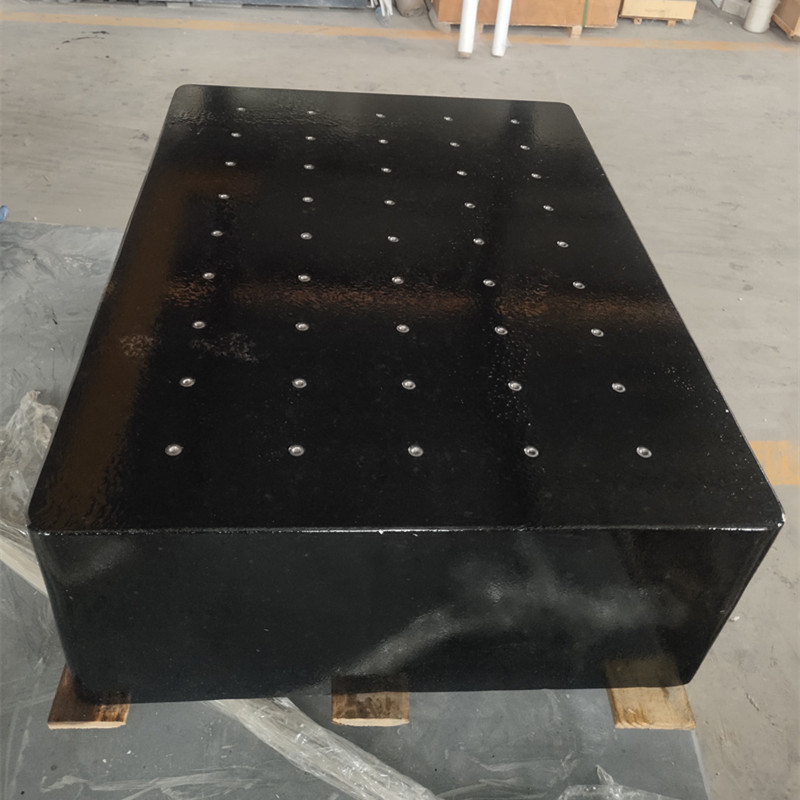
Surface Plate Calibration Ensuring Precision in Manufacturing In the realm of precision engineering and manufacturing, the surface plate calibration stands as a cornerstone for maintaining accuracy in measurement and machining processes. This meticulous procedure ensures that the reference surfaces used in various industrial applications are true to their intended flatness, parallelism, and squareness, ultimately guaranteeing the high quality of finished products. The process of surface plate calibration involves a series of steps designed to verify and correct any deviations from flatness that may have occurred over time or due to environmental factors such as temperature changes, vibration, or mishandling. Technicians typically employ specialized instruments like autocollimators, electronic levels, and laser interferometers to map the topography of the plate's surface and identify any high or low spots. One common method is the reversal technique, where the measuring instrument is placed on the plate and then both the instrument and the plate are rotated 180 degrees. Any deviations detected are then averaged out, providing a clearer indication of the plate's actual flatness. Additionally, crossing levels at 90-degree angles can determine the plate’s squareness, while parallelism is checked by comparing measurements taken across opposite sides of the plate. The importance of surface plate calibration cannot be overstated, as even minor discrepancies can lead to significant errors in the manufacturing process. For instance, if a surface plate used for machining operations is not accurately calibrated, it can result in misaligned parts or assemblies, affecting the product's performance and durability For instance, if a surface plate used for machining operations is not accurately calibrated, it can result in misaligned parts or assemblies, affecting the product's performance and durability For instance, if a surface plate used for machining operations is not accurately calibrated, it can result in misaligned parts or assemblies, affecting the product's performance and durability For instance, if a surface plate used for machining operations is not accurately calibrated, it can result in misaligned parts or assemblies, affecting the product's performance and durability surface plate calibration . In industries where exacting standards are paramount, such as aerospace and microelectronics, these inaccuracies can have catastrophic consequences. Moreover, regular calibration serves a preventive function by identifying wear and tear before it becomes a critical issue. By catching imperfections early, maintenance can be scheduled proactively, avoiding costly downtime and extending the lifespan of the equipment. It also supports continuous improvement initiatives by offering data-driven insights into the working conditions of machinery and the environment they operate in. In conclusion, surface plate calibration is an essential practice within the manufacturing sector, ensuring that tools and components meet stringent quality standards. Through precise measurement and correction, this process safeguards against inaccuracies that could compromise the integrity of end products. As technology advances and tolerances tighten, the art of surface plate calibration remains a vital skill, preserving the delicate balance between precision and performance in the world of manufacturing.
-

High quality industrial productsagement

High quality industrial products
View Details -

Meet the diverse needs of customers

Meet the diverse needs of customers
View Details -

Strict quality control

Strict quality control
View Details -

Top raw materials

Top raw materials
View Details -

Trusted supplier

Trusted supplier
View Details
Our application


news and information
Versatile Welding Table for Modular Fabrication and Assembly Projects
The Modular Welding Table Enhancing Efficiency in Metal Fabrication Welding is a critical process in

welding table cast iron
The Importance of Welding Tables in Cast Iron Fabrication Welding is an essential process in metalwo
y type strainer price
Investing in the right industrial equipment is critical for maintaining operational efficiency, espe
 English